Facebook
Sign in
Join
Articles
Buyers Guide
Calculators
New Products
News
Web Forum
More
Distributors
Manufacturers
Archive
Products-archive
News-archive
Service
Software
Trade Shows
Links
Sign in
Welcome!
Log into your account
your username
your password
Forgot your password?
Privacy Policy
Sign up
Welcome!
Register for an account
your email
your username
A password will be e-mailed to you.
Privacy Policy
Password recovery
Recover your password
your email
Search
Tuesday, October 7, 2025
Sign in / Join
Advertise
Contact
Registration
Search
Videos
Facebook
Sign in
Welcome! Log into your account
your username
your password
Forgot your password? Get help
Create an account
Privacy Policy
Create an account
Welcome! Register for an account
your email
your username
A password will be e-mailed to you.
Privacy Policy
Password recovery
Recover your password
your email
A password will be e-mailed to you.
pneumaticsonline.com
Articles
Buyers Guide
Calculators
New Products
News
Web Forum
More
Distributors
Manufacturers
Archive
Products-archive
News-archive
Service
Software
Trade Shows
Links
Home
Home | Pneumatics Online
Home | Pneumatics Online
Trending Now
Getting Heavy with Origa System Plus
New IIoT Tool Demonstrates Potential of Digitized Pneumatics
Atlas Copco unveils its first battery-driven portable screw compressor
The 92280-1 Features Valve Speeds Up To 0.006 Seconds
Norgren valve technology helps KUKA deliver streamlined robots
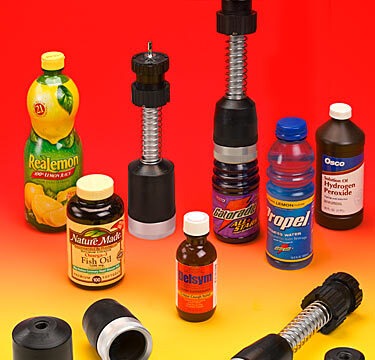
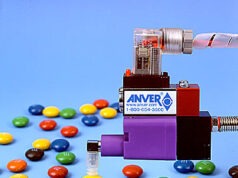
Anver offers Pneumatic Pick-Up Heads to Handle Small to Wide-Mouth Bottles
0
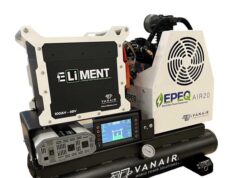
Introducing the EPEQ Light Duty Electrified Power Skid from Vanair: Your Path to...
0
Smart Flex Effector: A Modular and Intelligent Tool for Precise Automation
0
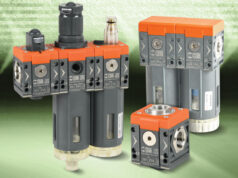
Metal Work Syntesi Air Prep Components from AutomationDirect
0
Miniature Suction Cups Match Precise Application Requirements
0
New Products
All
All
Articles
New products
News
Video
New Festo AI Solution Improves Machine Utilization, Product Quality, and Energy...
LVITs for Cylinder and Actuator Feedback
Festo Introduces Its Second-Generation Fingerboard
LVIT Technology™- Replacing Linear Potentiometers with a Contactless Solution
Videos
All
All
Articles
New products
News
Video
Festo BionicSwift 2021
SMC – Fms200. Automation Station working at Palo Alto College
Chicago Pneumatic’s vane air motor range
ANVER Vacuum Tube Lifter with Pistol Grip Control
7 Soft Robots of the Future
Staccato Technology with examples
Articles
All
All
Articles
New products
News
Video
Bosch Rexroth Pneumatics
Norgren and Johnston Sweepers combine to make sweeping changes
Advances in Pneumatic Valve Control
Norgren delivers peace of mind
Getting Heavy with Origa System Plus
Seal Film Printing Machine
TWIN ROD (AZV CYLINDER) APPLICATION FOR DIAGRAPH CORPORATION
The 92280-1 Features Valve Speeds Up To 0.006 Seconds
Latest News
Twenty Tips from Veteran CONEXPO-CON/AGG Attendees
Festo Introduces Pneumatic Essentials – a Program for Easy-Order/Fast-Ship Pneumatic Products
NFPA Announces Champions of 2022 Fluid Power Vehicle Challenge Events
Fabco-Air Launches a New Online Shop
NFPA and Macomb Community College Partner on Fast Track to Fluid Power Program in...
Emerson Expands Cylinder Manufacturing Capacity in Canada to Better Serve Automation Customers
ASME’s International Mechanical Engineering Congress & Exposition
SMC Becomes a Corporate Sponsor of Sales Education Foundation (SEF)
2020 Annual Conference Early Bird Registration Deadline Approaching
NFPA Fluid Power Vehicle Challenge Mentors Connect with University Students and Help Them Succeed
ROSS CONTROLS® Announces Acquisition of Pneumatrol Limited