Facebook
Sign in
Join
Articles
Buyers Guide
Calculators
New Products
News
Web Forum
More
Distributors
Manufacturers
Archive
Products-archive
News-archive
Service
Software
Trade Shows
Links
Sign in
Welcome!
Log into your account
your username
your password
Forgot your password?
Privacy Policy
Sign up
Welcome!
Register for an account
your email
your username
A password will be e-mailed to you.
Privacy Policy
Password recovery
Recover your password
your email
Search
Sunday, April 19, 2026
Sign in / Join
Advertise
Contact
Registration
Search
Videos
Facebook
Sign in
Welcome! Log into your account
your username
your password
Forgot your password? Get help
Create an account
Privacy Policy
Create an account
Welcome! Register for an account
your email
your username
A password will be e-mailed to you.
Privacy Policy
Password recovery
Recover your password
your email
A password will be e-mailed to you.
pneumaticsonline.com
Articles
Buyers Guide
Calculators
New Products
News
Web Forum
More
Distributors
Manufacturers
Archive
Products-archive
News-archive
Service
Software
Trade Shows
Links
Home
Home | Pneumatics Online
Home | Pneumatics Online
Trending Now
Redesigned PCD Proportional Valve Driver Marries Trusted Functionality with Improved Control and Flexibility
New Ultrasonic Leak Detector For Energy Conservation
Emerson Completes AVENTICS Acquisition
Festo Develops Filters to Ensure Clean Compressed Air in Food Zones
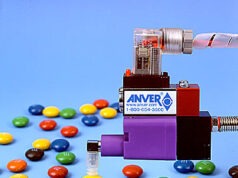
ANVER Standard Electric Powered Vacuum Lifter
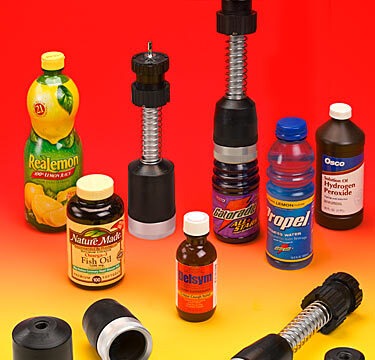
Anver offers Pneumatic Pick-Up Heads to Handle Small to Wide-Mouth Bottles
0
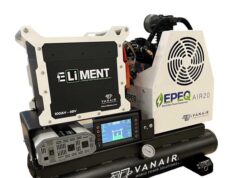
Introducing the EPEQ Light Duty Electrified Power Skid from Vanair: Your Path to...
0
Smart Flex Effector: A Modular and Intelligent Tool for Precise Automation
0
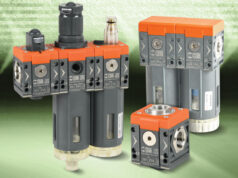
Metal Work Syntesi Air Prep Components from AutomationDirect
0
Miniature Suction Cups Match Precise Application Requirements
0
New Products
All
All
Articles
New products
News
Video
IIoT-Enabled Pressure Sensor Reduces Costly Pneumatic System Losses
Festo Introduces the CMSH Smart Positioner for Process Industry Solutions
Emerson Introduces First Pneumatic Valve System With Integrated Open Platform Communications...
Bimba Launches AIROS™ Family of Air Preparation
Videos
All
All
Articles
New products
News
Video
Festo BionicSwift 2021
ANVER Standard Electric Powered Vacuum Lifter
Theory of Shock Absorption
ESD Valve Actuator System for API Midstream Pipelines
Festo – BionicWheelBot
Soft Start Dump Valves for Excelon Plus Air Preparation
Articles
All
All
Articles
New products
News
Video
Coupling with Special Thread Replaces Various Adapters at once
KV goes to any length to meet customers requirements
PHD Series SIP Slides Used to Transfer Multiple Parts
The Sleeping Policeman
Oscillating Valve
Series PS Reach & Pick Clamp Used For Panel Transfer Application
Non-contact gripping protects fragile workpieces
Don’t forget to STOP for reliable motion – Rodless Cylinder Tips
Latest News
Twenty Tips from Veteran CONEXPO-CON/AGG Attendees
Festo Introduces Pneumatic Essentials – a Program for Easy-Order/Fast-Ship Pneumatic Products
NFPA Announces Champions of 2022 Fluid Power Vehicle Challenge Events
Fabco-Air Launches a New Online Shop
NFPA and Macomb Community College Partner on Fast Track to Fluid Power Program in...
Emerson Expands Cylinder Manufacturing Capacity in Canada to Better Serve Automation Customers
ASME’s International Mechanical Engineering Congress & Exposition
SMC Becomes a Corporate Sponsor of Sales Education Foundation (SEF)
2020 Annual Conference Early Bird Registration Deadline Approaching
NFPA Fluid Power Vehicle Challenge Mentors Connect with University Students and Help Them Succeed
ROSS CONTROLS® Announces Acquisition of Pneumatrol Limited